Drone Filming
Drone Cinematography for Complex Industrial Sites

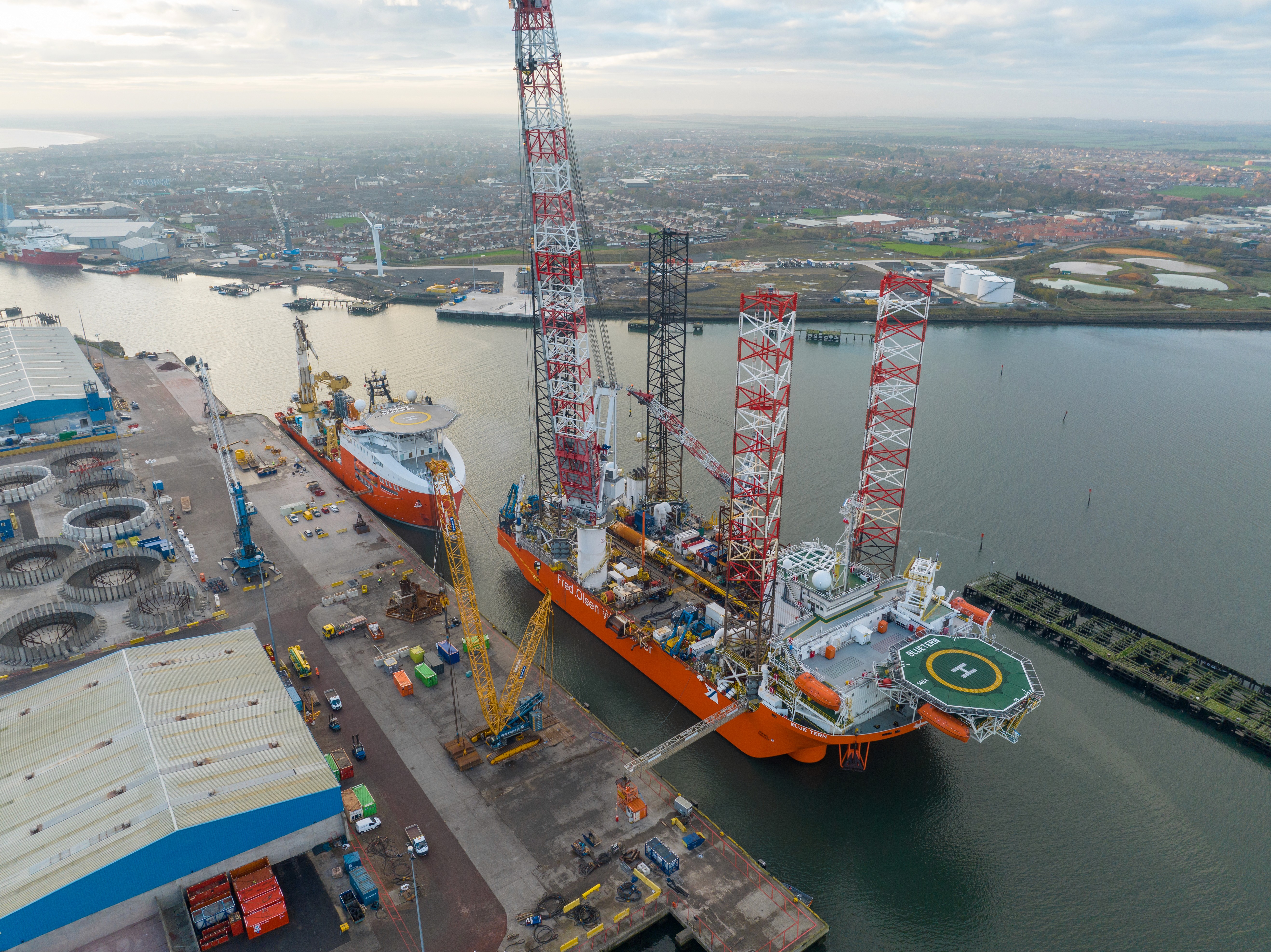
A crawler crane lifting into position, a vessel entering berth, a wind-turbine component arriving under escort - these moments are difficult to explain from ground level. Drone cinematography gives industrial teams the height, movement and context needed to show what happened, why it mattered and how the work was controlled.
For construction, engineering, ports and energy projects, however, the aircraft is only one part of the operation. Effective aerial filming must work around live logistics, exclusion zones, lifting plans, plant movements, weather limits and the expectations of a regulated site. The result should be more than dramatic footage. It should be an accurate, useful record of complex work.
Drone cinematography is a production discipline
Aerial filming is often commissioned because a project needs a powerful establishing shot. That has value, but it is rarely enough. A wide view of a bridge deck, quay, substation or fabrication yard can convey scale quickly; it cannot automatically explain the sequence of work, the technical challenge or the safety controls behind it.
Film direction turns coverage into a narrative. Before the aircraft is launched, the production team needs to understand the milestone being documented. Is the purpose to record an equipment installation for the project archive? Demonstrate a safe lifting operation for an internal communication? Build a case study for a tender submission? Or produce material that can support several of these uses over time?
Each objective changes the shot plan. A project update may need repeatable viewpoints that show measurable progress. A case study needs a stronger sense of arrival, activity and achievement. A training film requires clear, deliberately paced views of procedures, interfaces and controlled access areas. The most cinematic image is not always the most informative one.
Plan the industrial story before the flight
The strongest drone cinematography begins with a short, practical brief shared between the project team and the production crew. It should identify the works being filmed, the programme stage, the key personnel and the intended audience. It should also establish what must not be shown, including sensitive assets, security arrangements, client information or activities that could be misread without context.
A director-led approach looks for the visual logic of the operation. On a marine mobilisation, that might mean capturing the approach, berth activity, discharge, load-out and the relationship between shore crew, lifting equipment and vessel. On a renewable-energy installation, it may mean showing the scale of the component, the preparation work, the lift and the completed asset within its wider landscape.
That logic prevents a common failure: a collection of attractive aerial passes that cannot be edited into a coherent film. Industrial audiences do not need spectacle for its own sake. They need visual evidence that makes the operation understandable.
Repeat viewpoints make progress visible
For long-term construction documentation, repeatability is often more valuable than variety. Filming from agreed positions, heights and lens perspectives at defined intervals creates a credible record of change. It helps project teams compare progress, supports stakeholder updates and gives editors clean before-and-after transitions.
This requires discipline. A single progress flight may take place in changing light, but the framing should remain consistent enough for the viewer to recognise what has moved, been installed or been completed. Where programme conditions allow, ground footage and time-lapse can be planned alongside aerial coverage to provide both detail and scale.
Site safety and aviation compliance shape every decision
Live industrial sites are not film sets. They contain moving plant, cranes, overhead hazards, restricted areas, radio-controlled activity and people whose attention must remain on their task. Aerial filming has to fit within the site’s operational controls, not create another uncontrolled variable.
That begins with pre-production. The crew should review site rules, access requirements, inductions, emergency arrangements, planned works, local airspace and any location-specific restrictions. Flight activity must be coordinated with the site manager and, where relevant, lifting supervisors, marine coordinators, security teams and airside or port operations.
On the day, the plan may change. Wind can exceed safe limits. A lift may move forward or be delayed. A work area may become unavailable because of another contractor’s activity. Professional coverage allows for these realities rather than forcing a pre-written shot list onto a live operation.
CAA-authorised operations and clear risk assessment are essential, but compliance is not a box to tick after the creative plan has been made. It determines where an aircraft can be positioned, how close it may operate, who needs to be informed and whether a proposed shot is appropriate at all. A controlled decision not to fly is sometimes the correct production decision.
What industrial aerial footage should communicate
The best footage usually operates at three levels. First, it establishes the setting: the overall site, route, structure or marine environment. Then it shows the operation: machinery, teams, materials and the sequence of activity. Finally, it provides detail through carefully chosen ground-level shots, close views or supporting graphics in the finished edit.
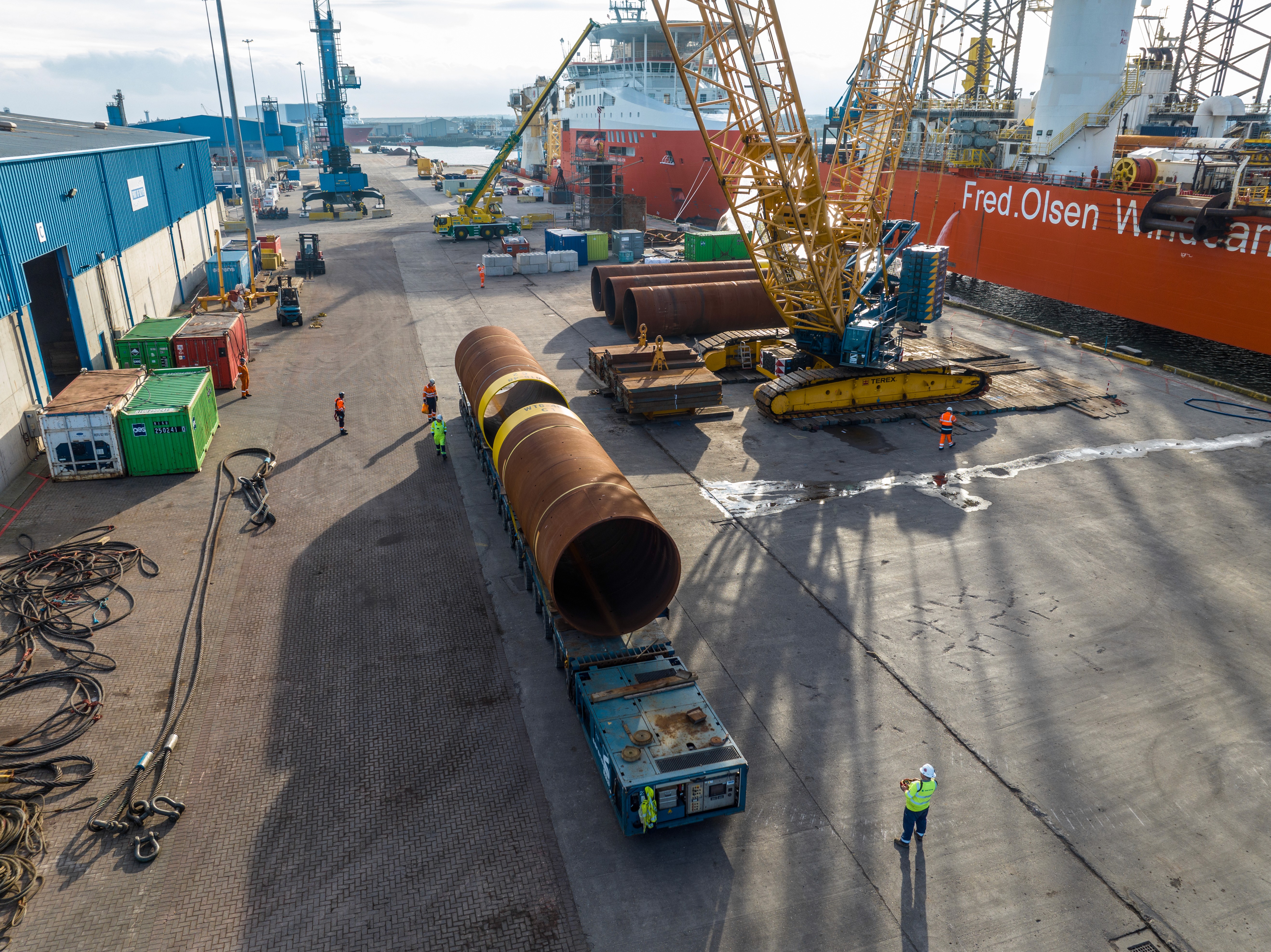
Aerial shots are particularly effective when they reveal relationships that are invisible from the ground. They can show the distance between a temporary works area and the permanent structure, the route of abnormal loads through a port, the scale of a laydown area, or the coordination of several work fronts across a large civil engineering site.
They must also be interpreted responsibly. A high, wide shot can make people appear close to operating plant when they are separated by significant distance and controls. Equally, an impressive low pass may hide the wider work zone. Editing, captions and voiceover should add the information that footage alone cannot prove.
Capture once, produce for several audiences
A well-planned filming day can create assets for far more than one launch film. This is where industrial teams gain real value from a considered production approach. Alongside the principal sequence, the crew can capture clean establishing views, vertical compositions for internal channels, controlled close-ups of equipment, interview support shots and neutral site coverage for future use.
The deliverables should reflect the communication need. A two-minute project film may sit alongside shorter milestone clips, still frames for reports, a version without music for presentation use and selected raw material for a client archive. For health and safety communications, a more measured edit with labelled stages may be preferable to a fast promotional cut.
There is a trade-off. Capturing a broad library takes time and coordination, particularly where access windows are narrow. Trying to obtain every conceivable angle during a critical lift or vessel turnaround is neither efficient nor sensible. Prioritise the operational moment, then schedule supplementary coverage around it.
Choose the right aircraft and camera language
Not every project needs the same flight profile. A large exterior site may benefit from stable, measured movements that show geography and progress. A confined fabrication space may need ground cameras, pole-mounted systems or carefully controlled interior filming instead. In GNSS-degraded areas, near steelwork or beneath structures, aircraft positioning becomes more constrained and alternative methods may be safer.
Fast, close-proximity flight can create energy, but it is not automatically appropriate for an industrial film. It introduces additional planning considerations and can distract from a message that depends on precision and control. Slow, deliberate movement often communicates capability more credibly, particularly when documenting major infrastructure, heavy lifts or port operations.
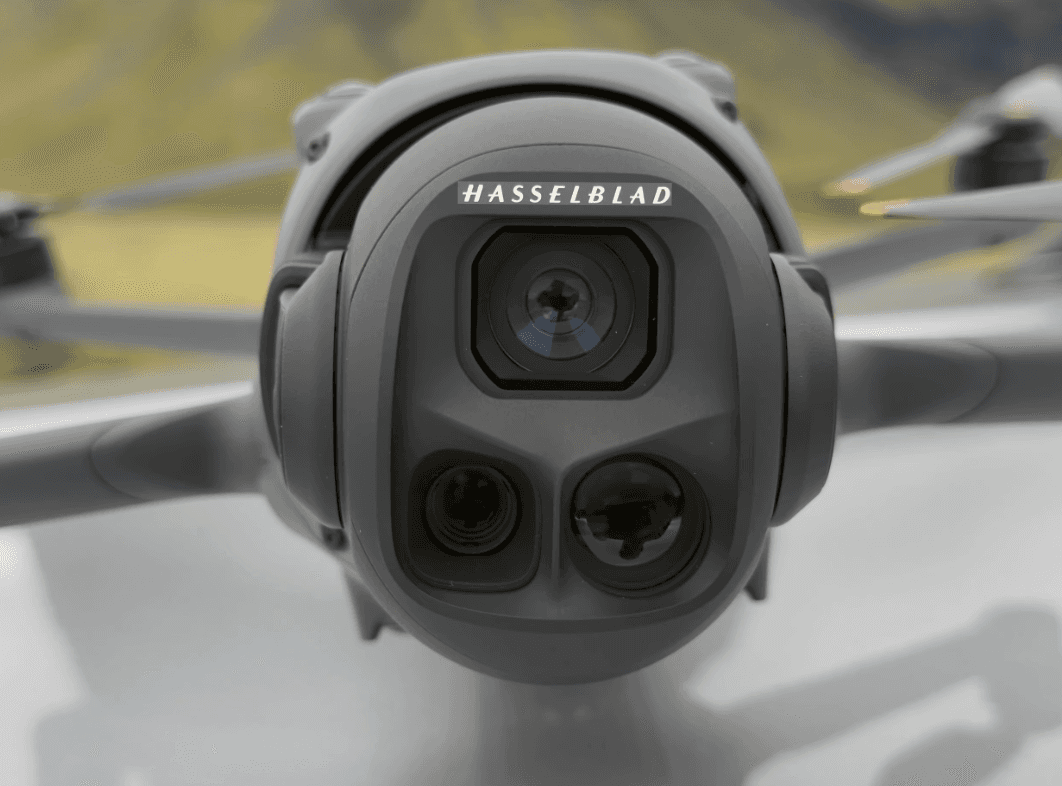
Image quality matters, but resolution alone is not a measure of production value. Consistent exposure, suitable frame rates, stable camera movement and considered grading all affect whether the final film feels authoritative. So does sound. Drone footage is rarely sufficient on its own for operational audio, which is why interviews, ambient recording and carefully produced narration should be planned where the story requires them.
Build an edit around evidence, not assumptions
Industrial projects carry reputational, commercial and safety implications. The edit should therefore be technically accurate. Asset names, project dates, load descriptions, locations and operational terminology need checking with the people closest to the work. A polished film loses credibility quickly if it identifies equipment incorrectly or implies a sequence that did not occur.
This review process is also where stakeholders can agree the appropriate level of disclosure. Some footage is suitable for public-facing business development; some belongs in a controlled client presentation, training programme or internal project record. Separating those uses early avoids late-stage compromises.
Helidragon approaches this work as a film production operation embedded within site controls: CAA Authorised, Film Director Led and Site Safety Compliant. That combination matters when the content has to stand up to scrutiny from clients, delivery partners, regulators and the workforce itself.
The useful question is not whether a drone can obtain the shot. It is whether that shot will help people understand the work, respect the controls behind it and recognise the capability of the team delivering it. When the answer is clear, the aerial film becomes a working asset long after the aircraft has landed.